
Injury Trends Across Different Workforce Demographics
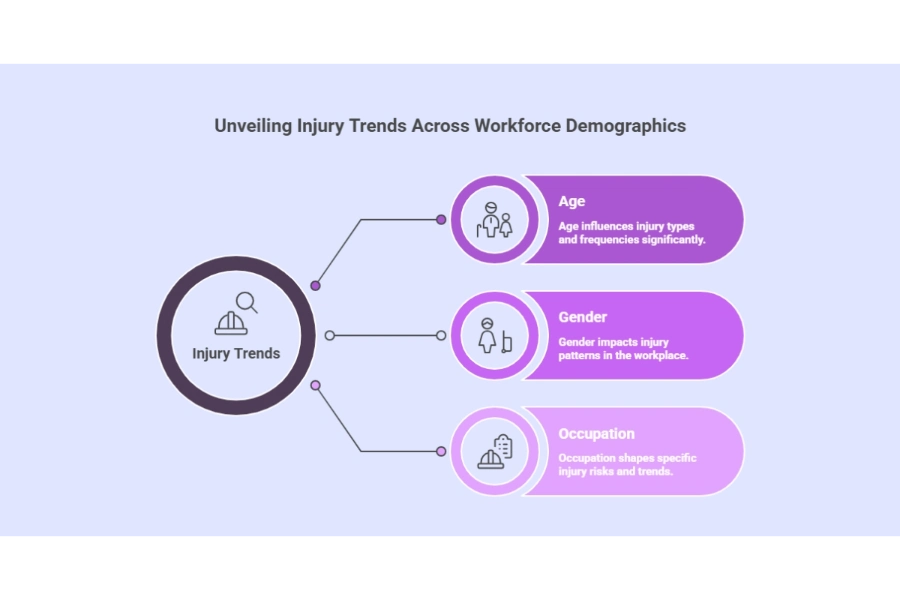
Workplace safety is a dynamic field, influenced by evolving operational practices and a changing workforce. Recognizing how injury patterns differ across various employee groups allows organizations to create more targeted and effective safety programs. Factors such as age, gender, and job experience can significantly shape the types and frequencies of workplace incidents, requiring a nuanced approach to risk management.
Age as a Factor in Workplace Injuries
An employee’s age can influence both the likelihood and the nature of work-related injuries. Different age groups often face distinct risks based on physical capabilities, experience levels, and the types of jobs they hold.
Risks for Younger Workers
Employees under the age of 25 tend to experience higher rates of nonfatal injuries compared to their older colleagues. This vulnerability is often linked to a lack of experience, which can make it harder to identify workplace hazards or feel comfortable voicing safety concerns. Common injuries among this group include lacerations, burns, and incidents related to contact with objects and equipment. Many younger workers are employed in the food service and retail sectors, where they frequently use sharp tools like knives and slicers.
Challenges for an Aging Workforce
While younger workers may have higher injury rates, incidents involving older workers are often more severe and costly. Workers over 60 tend to have lower injury frequencies, but the incidents that do occur can lead to longer recovery times. Slips, trips, and falls are a primary cause of injury for workers aged 65 and over. As the workforce ages, organizations must consider ergonomic adjustments and other supportive measures to accommodate the physical changes that come with age and help prevent incidents like back pain and strains.
Also Read: Choosing the Right Ang Mo Kio Tuition Centre for Steady Academic Success
Injury Patterns Across Genders
Injury data reveals notable differences in the types of incidents most commonly reported by men and women. These patterns are often tied to the industries and roles that each gender predominantly occupies, as well as physical and physiological differences.
Common Incidents by Gender
Men are more likely to work in high-risk industries like construction and manufacturing, which contributes to a higher rate of certain injuries. They report more incidents involving contact with equipment and machinery. In contrast, women are more likely to experience injuries from slips or falls. Repetitive stress injuries, such as tendonitis and carpal tunnel syndrome, are also reported more frequently by female workers, often in connection with tasks common in healthcare and administrative roles.
- Men are at a higher risk for injuries from physical demands and noise exposure.
- Women face a greater risk of injury from repetitive tasks and exposure to certain cleaning agents.
- Workplace violence is a significant concern, with women being victims of nonfatal assaults more often than men.
The Impact of Job Experience on Safety
An employee’s tenure in a role is a strong predictor of injury risk. New and temporary workers consistently show higher rates of injury compared to their more experienced colleagues, highlighting critical gaps in training and supervision.
Vulnerabilities of New and Temporary Staff
Workers in their first year on the job account for a disproportionately high number of claims. This elevated risk is present regardless of the worker’s age or previous industry experience. New and temporary employees are often unfamiliar with specific workplace hazards and may not have received adequate site-specific safety training. They may also be assigned to more physically demanding or hazardous tasks. This combination of factors makes them particularly susceptible to incidents like falls, cuts, and being struck by objects.
Developing a More Inclusive Safety Strategy
A comprehensive safety strategy acknowledges that a one-size-fits-all approach is insufficient. By analyzing incident data through the lens of demographics, organizations can identify specific risks and implement targeted interventions. This can include specialized training for new hires, ergonomic assessments for an aging workforce, and hazard awareness programs tailored to different job functions. A proactive approach helps protect every employee and strengthens the overall safety culture. For example, data confirms that workplace illnesses reached 100,200 cases in 2023, showing a persistent need for improved preventative measures across all workforce segments.
FAQ’s | Frequently Asked Questions
1: What are the five most common workplace injuries workers experience today?
The most common workplace injuries include strains, sprains, cuts, fractures, and repetitive stress injuries. These injuries often happen due to heavy lifting, slips, falls, or repeated job movements. Many industries report these injuries as leading causes of missed workdays and reduced productivity. Proper safety training and ergonomic practices help workers lower common workplace injury risks.
2: What do workplace injury statistics reveal about employee safety trends?
Workplace injury statistics show millions of workers suffer job related injuries every year globally. Government agencies collect injury data to identify risks and improve workplace safety standards. These statistics highlight common accident causes across industries and various job roles. Employers use injury data to create safer and healthier working environments.
3: Which industry has the highest overall workplace injury rates?
Construction consistently reports the highest workplace injury rates across all major occupations. Workers face hazards including heavy machinery, elevated work areas, and physically demanding tasks. Falls, struck by object incidents, and overexertion injuries remain extremely common. Strong safety rules and protective equipment help reduce construction site injuries.
4: Which industry currently reports the highest workplace injury rate?
Healthcare currently reports one of the highest workplace injury rates in industry statistics. Workers often experience injuries from lifting patients and performing repetitive physical duties. Back injuries, muscle strains, and sprains frequently affect nurses and caregivers. Better staffing levels and lifting equipment can reduce healthcare injury risks.
5: Why do workplace injury rates vary across different industries?
Workplace injury rates vary because job hazards and physical demands differ between industries. Jobs involving heavy labor, machinery, or long standing hours increase injury risks. Training quality and safety policies strongly influence injury frequency and severity. Understanding these factors helps organizations improve occupational health and safety outcomes.